

Growing a reseller hosting business isn’t about pushing features, it’s about showing results. Clients care about speed, uptime, and real support, not specs. Start local with free migrations that remove switching friction, build agency partnerships that bring steady referrals, and use performance audits to turn data into proof. Keep your website simple, your message human, and your hosting performance part of the story. The more you help clients feel confident online, the faster your reseller brand will grow.
Most resellers know how to set up accounts and sell hosting plans. Far fewer know how to market them effectively in a crowded space.
When forum users discuss their biggest challenges, one answer surfaces repeatedly: Getting your first few customers is easy. Reaching 1,000 takes consistency and clear positioning.
This guide focuses on helping you through the tricky part. Building systems that consistently attract, convert, and retain clients through practical strategies covering packaging, SEO, paid campaigns, organic social, and conversion-focused site design. Each tactic centers on one core principle: build trust through clarity, deliver measurable speed, and make every interaction feel human.
Create Outcome-Based Reseller Hosting Packages
The first marketing decision isn’t which ad platform to use, it’s how to present your product. Most resellers describe packages by disk space and bandwidth rather than results. Visitors care less about gigabytes and more about sites that load instantly and stay online during promotions.
Build Around Customer Needs
Group your offers by client goals instead of resource tiers. A launch plan works for new websites or small businesses that need fast setup. A growth plan serves agencies hosting multiple client sites with predictable traffic. A campaign-proof plan targets stores or event-driven brands that expect traffic spikes and need uptime guarantees. Each package name should explain who it’s for and what it helps them accomplish.
Translate Features Into Benefits
When you market hosting plans to your clients, remember that most of them aren’t technical. They care about reliability, security, and results, not drive types or bandwidth limits. Your job is to connect every technical feature to an outcome that matters for their business.
For example:
Instead of saying “includes NVMe SSD,” explain that it “keeps your customers’ sites fast, even during peak traffic.”
Rather than listing “daily backups,” describe it as “automatic daily restores that protect your site if anything breaks.”
Swap “advanced caching” for “pages that open instantly so visitors stay longer and buy more.”
Replace “24/7 monitoring” with “we’re watching your site around the clock, fixing problems before they affect you.”
Use phrases that focus on peace of mind, credibility, and performance. Small business owners usually respond to benefits like “stays online,” “loads fast,” “keeps data safe,” and “real support when something goes wrong.”
This approach builds trust and positions you as a problem solver, not a tech vendor. You’re not just selling server space, you’re selling confidence that your clients’ websites will keep their businesses running smoothly.
Add Marketing Extras That Boost Retention
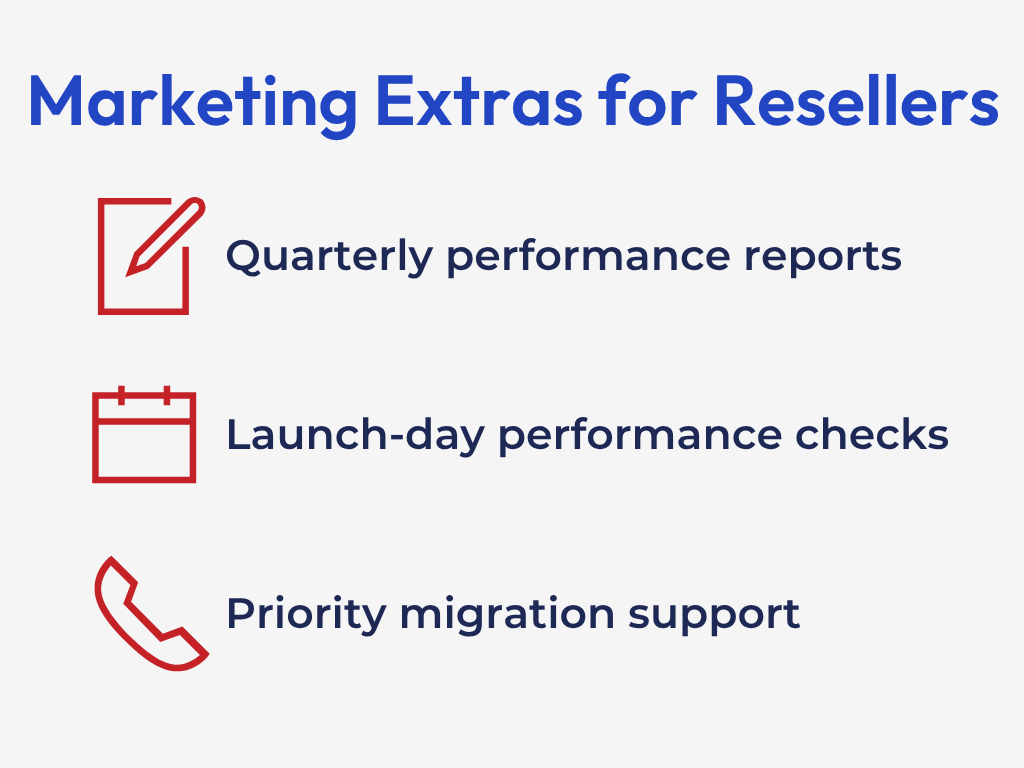
Differentiate with extras that build loyalty. Quarterly performance reports give clients visibility into their hosting performance without requiring them to dig through analytics. A launch-day performance check ensures new sites start strong. Priority migration support removes friction from the switching process, while free SSL installation and monitoring address common security concerns. These small operational touches make your offer sound like a service.
Use Limited-Time Hosting Offers to Increase Conversions
Borrow from cost-per-action marketing tactics by adding clear incentives that motivate immediate sign-up. Limited-time free migrations or including the first month of uptime monitoring create urgency and give you a clean conversion metric to measure. These micro-offers work because they reduce risk and provide immediate value.
Package Hosting Plans Around Customer Goals
Questions Your Website Must Answer Immediately
Before visitors scroll or click, your website should make four things clear:
Who is this for? Define the type of clients you serve best. For example, local businesses that need ongoing website care, creative agencies managing multiple client sites, or professionals who value having one trusted contact for both design and hosting.
What makes it reliable? Highlight your uptime, security, and human support.
What do I get? Explain what’s included in plain, results-focused language instead of technical specs.
How do I get started? Include a visible call to action with a clear next step.
Structure Your Sitemap Around Decision-Making
Keep navigation simple and built around conversion. Your homepage should deliver a brief brand statement and visual proof. This includes things like speed metrics, uptime data, and testimonials. A dedicated packages page presents your outcome-based tiers without overwhelming visitors.
Here are some examples of pages to consider:
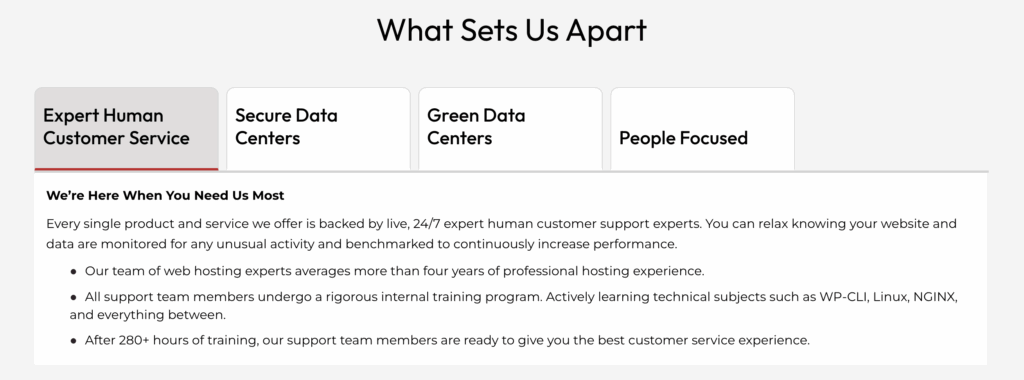
Your Why Us section provides proof points like your 99.99% uptime SLA, consistent performance, and real human support.
A Migrations page explains your white-glove transfer process in plain language, while your blog houses SEO and educational content.
Finally, your Contact or Quote page includes a short form with a clear next step.
If you target specific regions, add local landing pages with case studies or reviews from nearby clients. Many resellers find local targeting converts better and faces less competition.
Use Copy That Builds Trust
Replace technical jargon with short, clear promises. A line like “Sites stay online. Clients stay happy. You handle the work while we handle the uptime.” speaks directly to what your audience values. Back those claims with evidence. These could be speed test screenshots, uptime graphs, or client testimonials. Real proof is more convincing than broad statements like “trusted by thousands.”
Treat Page Speed as Part of Your Marketing
A fast site doesn’t just look professional, it drives conversions. Aim for sub-one-second load times using NVMe storage, caching, and a CDN. Measure performance with Core Web Vitals such as Largest Contentful Paint (LCP) and Time to First Byte (TTFB).
Tracking is just as critical as speed. Use GA4 with server-side tagging to connect site performance to leads and calls. Every marketing funnel relies on a fast, stable hosting foundation and your own site should demonstrate that reliability.
Use SEO to Capture Real Buyer Intent
Search engines remain the number one discovery channel for hosting services. This means that optimizing for organic search is still a great strategy. The challenge is that reseller hosting keywords are competitive. Instead of chasing “hosting for everyone,” focus on intent-driven searches your real prospects use.
Build a Content Funnel
Think of your content strategy in three layers that guide prospects from awareness to purchase:
Top of Funnel (Awareness): Educational content that answers broad questions like “Why website speed matters more than design,” “What reseller hosting means for digital agencies,” and “How slow sites hurt ad ROI.”
Middle of Funnel (Consideration): Comparison and solution-based articles such as “Reseller vs shared hosting for client sites,” “How to migrate to a faster host without downtime,” and “Best uptime SLAs for small agencies.”
Bottom of Funnel (Conversion): Transactional, keyword-rich pages including “Reseller hosting for WordPress agencies,” “White-label hosting with free migrations,” and “Buy reseller hosting with NVMe servers.”
Each layer should lead naturally to the next, with calls-to-action like “View plans” or “Schedule a free migration consult” guiding visitors deeper into your funnel.

Use Smart Internal Linking
Connect blog articles to relevant package pages and quote forms with natural anchor text. For example, link “fast WordPress reseller hosting” directly from an article about “What Is Reseller Hosting for Agencies?” to your mid-tier plan. Use schema markup, particularly Product and FAQ schemas, to make your listings stand out in search results with rich snippets that display pricing, ratings, and common questions.
Add Local SEO Signals
If you serve specific regions, optimize for local intent by adding your business address and contact information to every page. Create a Google Business Profile and keep it updated with posts, offers, and company information. Encourage verified reviews, as forum users consistently report this as a major differentiator in local markets. A handful of detailed, authentic reviews often outperforms dozens of generic five-star ratings.
Publish Content That Compounds
Release content with recurring value rather than chasing trending topics. Uptime transparency posts, benchmark updates, and client success stories remain relevant for months or years. Repurpose each piece into three social snippets, one infographic, and one short video. This approach maintains consistency without requiring new topics every week, and it maximizes the return on each piece of content you create.
Integrate Paid Search and SEO Under One Strategy
Paid search shouldn’t compete with your SEO plan, but rather the two should work in tandem. Many resellers waste ad spend by sending traffic to generic homepages. Align your campaigns with the same keyword and content structure you built for SEO.
Mirror Your SEO Clusters in Ad Campaigns
Create campaigns organized by intent rather than by keyword volume. Here are a few to consider:
Education campaigns drive blog traffic and build remarketing audiences.
Comparison campaigns target middle-of-funnel prospects who are evaluating options.
Conversion campaigns focus on package signups and quote form completions.
Use SKAG-lite or tight ad groups with two to three keywords each for relevance and high quality scores.
Craft Ads That Match Your Packages
Ad copy should echo your offer with specificity. “Fast NVMe Reseller Hosting for Agencies, Real 24/7 Support. Free Migration This Week” tells the prospect exactly what they’re getting and who it’s for. Include specific metrics like uptime percentages, load times, and response times. Proof-based claims convert better than vague adjectives like “powerful” or “enterprise-grade” because they give prospects concrete expectations.
Measure Performance Using CPA Logic
Instead of just counting “leads,” measure cost per meaningful action. These could be a quote request, onboarding call, or migration scheduled. Set up conversion tracking through Google Ads and your analytics dashboard to follow that metric across the funnel. This gives you visibility into which campaigns drive not just traffic, but qualified prospects who actually convert into paying customers.
Keep Your Messaging Consistent
The biggest issue seen in user feedback is mixed messages between ads, landing pages, and homepages. Maintain the same value proposition, tone, and offer language across channels. If your ad says “Free Migration in 7 Days,” your landing page headline must repeat that phrase exactly. This consistency reassures visitors that they’ve landed in the right place and reduces bounce rates significantly.
Many resellers overlook organic social, calling it “too slow.” In reality, it’s where you prove you’re real. Forums show that customers trust providers who post consistently, even if it’s only a few times per week.
Pick a Manageable Posting Rhythm
You don’t need daily updates to build trust. Commit to three posts per week across two primary channels. These are typically LinkedIn for business credibility and Threads or X for quick engagement. Use a rotation that includes education, evidence, and behind-the-scenes content.
Educational posts might be quick 30-second tips or how-tos like “How to check if your host is throttling bandwidth.” Evidence posts showcase screenshots of uptime, successful migrations, or load-time improvements. Behind-the-scenes content includes snapshots of your team or support process to humanize your brand and make you feel less like a faceless corporation.
Engage, Don’t Broadcast
Set aside 15 minutes per day to answer questions on LinkedIn groups, Reddit, or industry forums. A good approach is to help first, sell later. The same users will remember your name when they’re ready to switch providers. This approach builds genuine authority rather than just visibility. When you consistently provide helpful answers without immediately pushing your services, people start to see you as a trusted resource rather than just another vendor.
Be Transparent
Share small failures or learning moments like “We tested three caching setups; here’s what worked best.” This kind of honesty drives far more engagement than polished corporate updates because it demonstrates real expertise and builds trust. People connect with authenticity, especially in technical fields where many companies hide behind marketing speak.
Automate Your Repurposing
Extract maximum value from every blog post by creating one short quote image, one LinkedIn carousel, one vertical clip for YouTube Shorts or TikTok, and one discussion question for Threads. This makes your social system repeatable without adding new work, and it ensures you’re meeting your audience where they already spend time.
Use Email and Automation to Nurture and Retain
Email is still one of the highest-ROI digital channel, especially for resellers managing recurring billing. The key is creating sequences that feel helpful rather than pushy.
Create Lightweight Automation Flows
Start with three core sequences. Your lead magnet nurture should follow the pattern of welcome, value email, soft offer, case study, then quote link. This gives prospects time to understand your approach before asking for commitment. Your post-migration sequence welcomes new customers aboard, teaches them how to monitor site speed, and encourages referrals through a credit incentive. Your renewal reminder series sends 30-day and 7-day notices before plan renewals, including relevant upsell prompts based on their current usage patterns.
Keep the tone human and helpful throughout. Use plain-text formatting to make messages feel like personal emails rather than automated blasts. This simple formatting choice can significantly improve open rates and engagement because it feels more genuine.
Stay Visible Post-Sale
Send a short performance summary every quarter with a message like “Your sites maintained 99.99% uptime last month. Here’s what’s next.” Attach helpful content such as speed-optimization guides or plugin update reminders. This builds trust and lowers churn, a common reseller pain point raised in community discussions. When clients see you proactively managing their success, they’re far less likely to shop around for alternatives.
Track the Right Metrics and Review Them Regularly
You can’t optimize what you don’t measure. Most resellers track “sales per month,” but that number alone hides the real story. Instead, organize your metrics by review frequency to ensure you’re catching problems early while still seeing the bigger picture:
Track Weekly: Page load time and uptime, form submission count, conversion rate by channel, and support response time.
Review Monthly: SEO visibility gains, cost per lead and cost per action, landing page conversion rates, and email engagement including open and click rates.
Analyze Quarterly: Top three lead sources by ROI, package mix to understand which plans convert best, churn and upgrade rates, and content that drove the most pipeline.
Tie every improvement to your core value propositions around speed, support, scalability, and accountability. This keeps your optimization efforts focused on what actually matters to your customers rather than vanity metrics.
Real-World Playbooks to Put These Tactics Into Motion
The best way to understand these strategies is to see them in action through concrete campaigns. Each of these playbooks follows the same cost-per-action principle: one clear action, one measurable outcome.
1. Local Launch Month
Goal: Win new hosting clients in your local market by removing the biggest obstacle to switching, the technical hassle.
Strategy Overview:Position yourself as the trusted local hosting partner who helps small and medium businesses leave unreliable or slow providers. The free migration offer creates a low-friction entry point while your local presence builds confidence.
Tactics:
Create a campaign landing page titled “Faster Local Hosting | Free Site Transfer.”
Keep the message simple: “We’ll move your site for free, no downtime, no hassle.”
Add proof: a few testimonials or before/after speed screenshots.
Run geo-targeted Google Ads around searches like “website hosting near me,” “slow business website,” or “[city] WordPress hosting.”
Join local Facebook and LinkedIn groups and post short educational tips about site speed and security, then invite readers to claim a free migration.
Record a 30–60 second video showing how easy migration is and how it improves load times; include a clear call to action to schedule the transfer.
Follow up personally with leads to build relationships and word-of-mouth referrals.
Why It Works:It eliminates risk for small business owners while giving you a chance to demonstrate speed and reliability. Targeting locally also lowers ad competition and improves conversion rates.
2. Agency Partner Drive
Goal: Build recurring revenue through partnerships with design and marketing agencies.
Strategy Overview:Agencies often need reliable hosting for multiple clients but don’t want to manage servers. By co-branding and offering referral incentives, you become their behind-the-scenes hosting partner while they continue to own client relationships.
Tactics:
Develop co-branded sales materials: Create email templates, service one-sheets, and performance reports agencies can brand as their own.
Launch a referral incentive: “Bring three clients, get your next month free.” Use this to motivate agency owners to test your program.
Promote through LinkedIn:
Use carousel posts showing “before and after” metrics or partner testimonials.
Share short posts about how agencies can add recurring income by offering hosting without added workload.
Host a short partner webinar or Q&A about offering white-label hosting profitably.
Provide partner recognition: Feature successful agencies on your site or newsletter.
Why It Works:It builds a scalable, mutually beneficial network. Agencies earn more per client, you expand through trusted referrals, and clients get better performance with dedicated support.
3. Speed Audit to Upgrade
Goal: Convert technically minded prospects and agencies by providing personalized proof of performance gains.
Strategy Overview:Offer tangible, data-backed value before asking for a sale. A free performance audit builds credibility and starts the conversation with insight rather than a pitch.
Tactics:
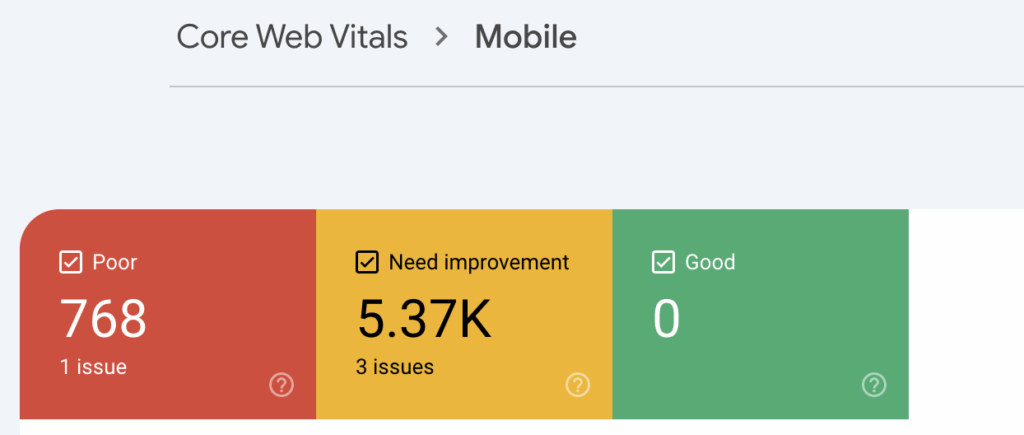
Build or link to a simple audit tool that checks Core Web Vitals (LCP, CLS, TTFB) or use a short form where users submit their domain for a manual check.
Send prospects a branded PDF report comparing their site’s current performance to expected metrics on your hosting.
Include specific benefits such as:“Deliver site content in milliseconds faster than standard SSD hosting.”
End every report with a clear call-to-action:“Upgrade your clients to faster, more reliable hosting, schedule your site transfer today.”
Promote the audit through LinkedIn, your email list, and your existing agency partners.
Why It Works:You provide measurable value upfront and demonstrate expertise. Seeing real speed gains makes upgrading an easy, evidence-based decision rather than a sales risk.
Build Consistency, Not Chaos
Successful reseller hosting marketing doesn’t come from shouting louder or discounting harder. It comes from clear packaging that speaks to outcomes rather than specs, a fast and trustworthy website that answers prospect questions immediately, SEO and paid campaigns that reinforce each other instead of competing, and social proof built consistently over time.
You don’t need to implement everything at once. Start by reworking your package names and benefit language to focus on what customers actually care about. Build a single, fast landing page with measurable calls-to-action that guide visitors toward conversion. Publish one helpful, keyword-rich blog post this week that addresses a real problem your prospects face.
Small steps compound quickly when backed by reliable infrastructure and genuine human support. The resellers who succeed long-term are those who build trust systematically, making every interaction feel personal even as they scale.
Key Takeaways: Turning Reseller Hosting into a Scalable Business
Focus your marketing on outcomes, not features. Clients care about reliability, speed, and support more than specs.
Build your website around core buyer questions: who it’s for, what makes it reliable, what they get, and how to get started.
Use plain, benefit-driven language instead of technical jargon to make your offers approachable and trustworthy.
Start with local campaigns that remove barriers to switching. Free migrations are powerful conversion tools.
Expand through agency partnerships with co-branded materials and referral incentives to scale recurring revenue.
Use performance audits to provide tangible proof of improvement and convert prospects with data-backed results.
Maintain engagement with helpful, automated email sequences that focus on client success and retention.
Support all campaigns with SEO-friendly educational content that demonstrates expertise and drives organic traffic.
Treat site speed and uptime as part of your marketing. Every fast load reinforces your brand’s credibility.
Build trust first, automate smartly, and let your reliability do the selling.